
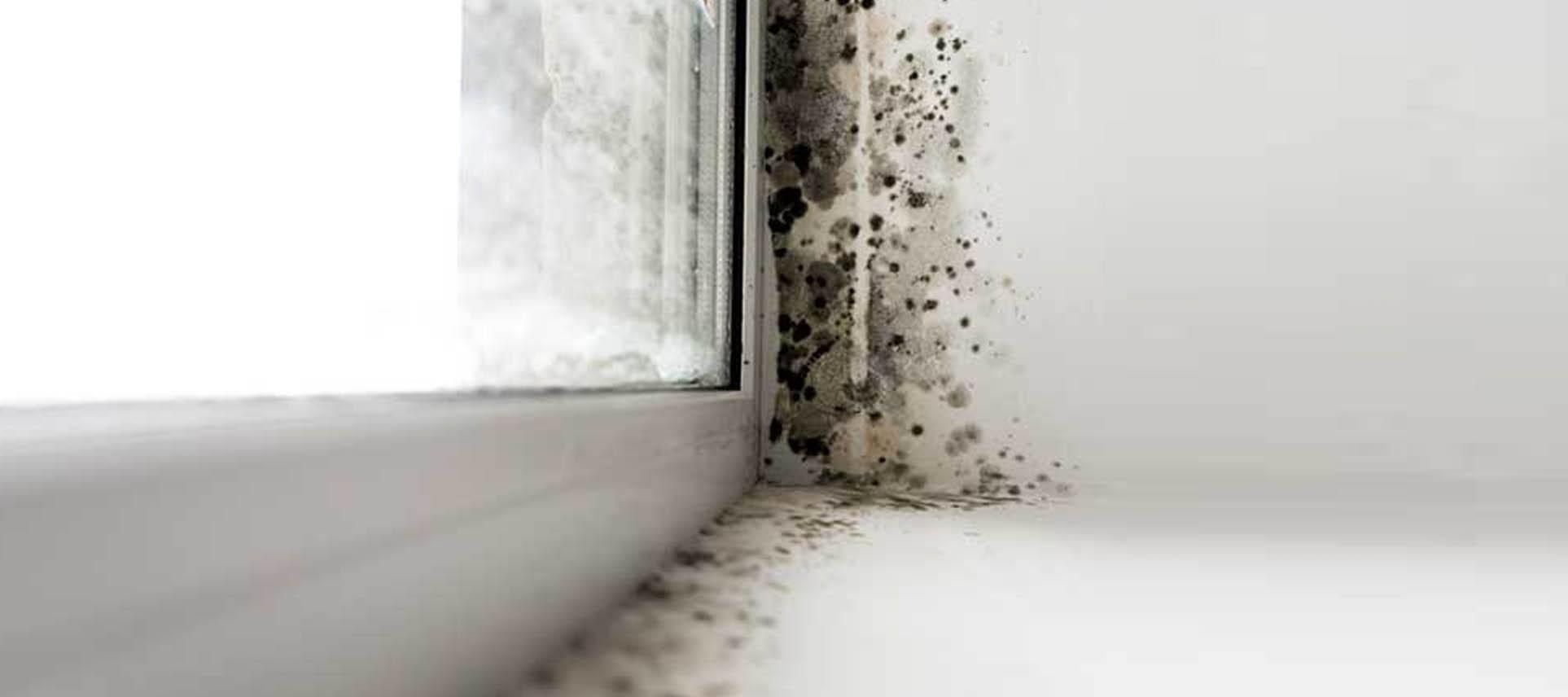
The difference between damp & mould?
Damp can be a common problem in many UK properties, some of the main causes of damp are often due to water ingress, condensation, internal leaks and structural issues.
We are often asked, What Is The Difference Between Damp & Mould?
Let’s start with condensation, which, is probably the most common cause of damp in the home, with well over 6 million homes experiencing damp and condensation issues. The most effective way to diagnose damp issues is to instruct a damp surveyor, also known as a damp expert, or damp inspector to visit your property and carry out a detailed damp assessment using various damp analyses equipment, skills and knowledge to determine the source of the problem.
What Causes Condensation?
Condensation in the home can be a serious problem if the source of the condensation and cause is not identified and remedied.
Condensation can cause damp and rot in timber, carpets, walls and other structures within the property. In some cases it could become a serious problem, especially if the damp begins to rot structural timbers for example, within the building.
Condensation is the process where water vapour becomes liquid. It is the reverse of evaporation, where liquid water becomes a vapour. Condensation happens in one of two ways. Either the air is cooled to its dew point, or it becomes so saturated with water vapour that it cannot hold any more water.
During the site visit where a damp survey visit is carried out, the damp surveyor will initially obtain a full understanding of airborne moisture extraction, before undertaking a detailed Moisture Mapping survey of all walls and floors, in order to fully understand where increased moisture exists, the extent of the issue, and in turn determine the true cause of the issue.
What Is Moisture Mapping?
Moisture mapping is a visual representation or outline of the wet areas in your home or property that need to be dried and returned to their dry standard.
It also shows what areas in your building have not been affected by water damage. Moisture Mapping is followed by an in-depth Thermal Imaging Survey. Thermal Imaging allows the damp surveyor to fully appreciate the moisture within the structure, and it provides a visual image for both the Damp Surveyor and the client, as all imaging is included in the detailed reports.
On completion of the thorough damp investigation, the Damp Surveyor will explain in detail the issues causing the damp problems with the property, the areas of concern internally, and more importantly, what is required to rectify the issues. All of this information is included within the damp surveyors reports, which typically follow within two working days of the damp survey.
The damp surveyors will never discuss their findings with tenants, or the property owner, if providing a damp survey for a buyer.
What Is Mould And What Causes It?
Mould is a type of fungi, which can grow in many different areas where the right conditions are met. This includes, indoors spaces, such as in your home, as well as outside in a natural environment. Mould or Fungi, needs a number of elements to survive.
Moisture in the home is often caused by damp, leaks or condensation. In turn this can cause mould to grow.
Mould is a microscopic fungus that helps nature decompose dead organic material. Both mould and mildew are different types of fungus, but mould is usually shades of black, blue, red, and green, whereas mildew is white.
Temperature is a contributing factor for mould
Temperature is a significant factor in mould growth. Moulds tend to grow better in warmer temperatures, although they are very resilient. This is often why you will experience mould growth in the warmer locations of your property.
Oxygen also assists mould growth
Whilst moulds do need oxygen to survive, they don’t need a lot of it, there will be plenty of oxygen available in the average home for mould to grow and develop if left untreated. The optimum temperature and oxygen levels will not be in short supply in a UK home. It is also important to note that organic materials are in abundance.
What Is Damp And What Causes It?
Prolonged exposure to damp can cause serious health risks with mould growths and added moisture, which, in some cases can result in respiratory illnesses.
The ongoing risk to the building is the deterioration of plaster, contamination from salts, and erosion of the structure, in turn causing unnecessary costs, if the issue isn’t correctly diagnosed sooner rather than later.
So what is damp and what causes it? The main cause of damp is condensation in the home. Weather, also plays a significant part, especially if external walls have deterioration and are causing moisture ingress. If you suspect you have a damp issue it is advisable to instruct a damp surveyor, or a damp expert, who can diagnose the damp problem and find the true source and cause of the damp issues.
What Is The Best Way To Fix Damp Issues?
The most effective solution to fixing damp, condensation or mould in your home or property is to instruct an expert.
A damp survey carried out by a damp surveyor will highlight the true cause of the damp problems and provide solutions as to how to remedy the issues you face with damp and mould. A professional surveyor will visit your property and carry out the following in order to provide a comprehensive assessment and report.
A professional damp surveyor or damp expert will use a variety of specialist equipment, skills and knowledge to correctly diagnose and determine the source of damp. Some of the methods used in the damp survey are;
- Thermal Imaging:
Using the latest in Flir Thermal Imaging technology with MBX, the surveyor is able to view not only heat pools within your property, but also cold pools. Buildings can be thoroughly scanned using Flir Thermal Imaging camera, identifying problem areas that cannot be seen with the naked eye. Thermal Imaging can facilitate repairs quickly and thoroughly, and is much more cost effective than other conventional methods that can be intrusive. The cameras are specifically designed for building inspections such as moisture detection, leak detection, insulation problems and much more.The thermal imaging camera converts surface temperature into a colour coded image of the view. With the damp surveyors knowledge and experience, it allows them to ascertain what is happening beneath the surface, and the extent of the issue.
- Moisture Measurement System:
Search Mode: The equipment is used to obtain relative moisture readings in solid homogenous materials such as walls and floors. The readings are obtained to a depth of 15mm below the surface. The unit will indicate readings from 60 – 1000, and state if the material is Dry, At Risk , or Wet. This allows us to obtain a picture of the area effected.
Measure Mode: The equipment is used to obtain the percentage of moisture in wood (%MC), and the moisture levels in other non-conductive solid materials such as walls and brickwork (%WME). The unit states if the material is Dry, At Risk or Wet, whilst providing the actual percentage of moisture present. This allows us to ascertain the point of highest water content, normally the source point on the surface.
Moisture Probes: In order to ascertain the moisture content level deep within a solid or brick wall, we utilise the probes by drilling two 6mm holes into the wall spaced 50 – 70mm apart. With the two probes inserted, we are able to measure the (%WME) deep within the wall. This provides us with added information compared to only obtaining surface to 15mm readings.
- Hygroscopic Salts Detection:
We use the unit as a basic Salts detector. In combination with the wall probes, we can assess the level of salts, which in turn will indicate if further investigations are required regarding issues such as moisture penetration from the ground. - Hygrometer Mode:
The equipment (Hygrostick) is used to ascertain if condensation is an issue within a property, as it measures the Relative Humidity levels (%rh), the Ambient Temperature (TAIR), and the Dew Point Temperature (TDEW). This will confirm the levels in the property, regarding moisture in the air resulting from everyday actions, and the levels of the structure, thus confirming if the moist air is condensing on the walls, which normally results in black mould. - Condensator Mode:
In combination with the Hygrostick, we utilise the unit to ascertain if condensation is actually occurring, or if condensation is actually present on a surface. In addition to the normal Hygrometer readings, we obtain Surface Temperature levels (Ts), and Temperature Difference levels (TDIFF) which will determine if there is No Condensation, at Risk Of Condensation, or Condensation is present. - Borescope Surveys:
Utilising various Borescope cameras, we can access the smallest and most difficult of places. Our hand held 1m long camera with a 3” screen can be used to see under and behind obstructive objects, allowing us to inspect thoroughly. Our 7m long 7mm dia camera is connected to our site laptop, and this is used to access locations such as cavities within walls, therefore allowing accurate assessments of wall ties and cavity wall insulation. Our 20m long flexi camera allows us to assess the internal condition of pipes such as rain water pipes, surface water drainage, and ducts and vertical service ducts. This allows us to obtain vital information that others cannot obtain. - Quadricopter Survey:
Using the very latest in Quadricopter equipment, we are able to assess hard to reach areas of your property such as the roof and chimney stacks, and have a very close up view. We can record the issue with the built in vertical and horizontal HD cameras, in addition to taking photographs for report purposes. Using in combination with the Apple I Pad, we can receive real time footage, and assess the property thoroughly without the use of expensive scaffolding, and confirm without doubt what defects are present. (The Quadricopter cannot be flown in high winds). - Distance Analysis:
Sometimes it is not always possible to get up close to an object, such as a high chimney stack on a roof, where access could be dangerous. In these instances we utilise powerful binoculars which allow the next best thing to a close up visual inspection. That said, we always assess directly whenever safe to do so.
What Is Rising Damp And Is It A Myth?
Rising damp is often referred to as moisture simply rising up the walls of a property from ground level. However, what is rising damp and is it a myth?
A common question asked by many unsuspecting homeowners when confronted with a damp problem. The truth of the matter is, Rising Damp Is A Fallacy, it is a myth.
One only has to take the city of Venice in Italy as an example. If rising damp was the main contributing factor of damp in a property, then why are the properties that are submerged in water, not corroding, or deteriorating, or soaked through with water?
The same could be said for bridges and other structures submerged in water. Surely they would all be saturated with water?
When damp appears at the base of a wall most people assume this is ‘rising damp’, however, what you’re really seeing is excess moisture caused by penetration above within the structure, which has naturally migrated down to the DPC (Damp Proof Course) level and it has remained above the DPC and therefore it has not risen up from the ground.
This also confirms that the DPC is effective as it is not allowing moisture to penetrate downwards through it.
Get Advice From A Damp Expert!
You wouldn’t ask a mechanic to plaster your walls would you?
Many damp proofing companies will tell you that you have ‘rising damp‘ in order to sell you a product.
This is simply false. ‘Rising damp’ does not exist and it is extremely rare that moisture will rise up from the ground on its own accord. The vast majority of properties have been built with a DPC (Damp Proof Course).
A DPC is designed to stop moisture from penetrating up past a specific point. Slate was a material used for DPC’s for thousands of years. Water will not penetrate slate, nor will it penetrate later materials used for a DPC. Therefore, why would you need a new chemical injection DPC?
In many situations, the damp cause will been incorrectly diagnosed and unnecessary remedial works will be offered. A professional damp surveyor will never recommend a new chemical damp proof course to be injected.
More often than not, a builder or contractor advising a homeowner on their damp problems will wrongly advise and offer to provide remedial works, which, are often simply not needed.
In fact, more often than not, it is often the case that remedial works are not required at all, and the only changes needed are habitual changes within the home.
What Does Mould Look Like?
Moulds are microorganisms. They can be found almost everywhere and they can grow on almost anything if it is moist enough.
Moulds often look like furry growths, black stains, or specks of black, white, orange, green or brown. You may often see mould growing on old fruit in your kitchen, fridge or for some, mould can grow on the walls of their home.
Can damp and mould affect my health?
Yes, if you have damp and mould in your home you’re more likely to have respiratory problems, respiratory infections, allergies or asthma. Damp and mould can also affect the immune system.
Who’s affected by mould?
Some people are more sensitive than others, including:
- babies and children
- elderly people
- those with existing skin problems, such as eczema
- those with respiratory problems, such as allergies and asthma
- those with a weakened immune system, such as those having chemotherapy
- These people should stay away from damp and mould.
What Does Damp Look Like?
There are a number of tell-tale signs that suggest that you have damp in your house or property.
Typical signs of damp include:
- A distinctive musty smell
- The appearance of mould (see above) or mildew on walls, floors or ceilings
- Walls, floors or ceilings that feel cold or wet
- Water droplets on walls
- Dark or discoloured patches on walls or plaster
- Lifting or peeling wallpaper from moisture in the walls
- Excessive condensation on windows, not just during the winter
- Rotting woodwork like skirting boards that are coming away from the wall or warped, rotten or discoloured
Can Damp Cause Health Problems?
Yes, if you have damp and mould in your home you’re more likely to have respiratory problems, respiratory infections, allergies or asthma. Damp and mould can also affect the immune system.
Who’s affected?
Some people are more sensitive than others, including:
- babies and children
- elderly people
- those with existing skin problems, such as eczema
- those with respiratory problems, such as allergies and asthma
- those with a weakened immune system, such as those having chemotherapy
- These people should stay away from damp and mould.
How does it affect your health?
Moulds produce allergens (substances that can cause an allergic reaction), irritants and, sometimes, toxic substances. Inhaling or touching mould spores may cause an allergic reaction, such as sneezing, a runny nose, red eyes and skin rash. Moulds from damp can also cause asthma attacks.
Conclusion
Hopefully, you will have a better understanding of damp, mould and condensation issues as well as rising damp problems within the home and that you should now be better informed about rising damp issues in properties.
If you wish to speak with an advisor and discuss booking a damp survey with a professional damp surveyor, then call ARK on: 0161 286 4821 and we will be happy to help resolve your damp issues once and for all. Alternatively, contact us from our contact form.
PIV Units Manchester | PIV Units Stockport | PIV Units Cheshire | Damp Proofing Stockport | Damp Proofing Cheshire | Damp Proofing Manchester
Positive Input Ventilation Systems, PIV Units, Damp Proofing services in Stockport, Didsbury, Cheadle, Cheadle Hulme, Heaton Mersey, Tameside, Knutsford, Altrincham, Wilmslow, Hale, Sale, Alderley Edge, Macclesfield, Glossop, Poynton, Heald Green, Timperley, Bowden, Trafford, Styal, Warrington, Cheshire and Manchester.