
7 ways to damp proof your property
Damp in the home is one of the biggest, and often costly, experiences homeowners and go through.
Not only can damp cause damage to your property, but it can also cause health problems for family members or tenants living there.
Thankfully, there are plenty of options to damp-proof your property and we’ve outlined the very best in this guide…
What causes damp?
There are three main causes of damp in the home and a correct diagnosis of the cause is key to solving the issue with the right solution.
1. Rising damp
Rising damp is where water rises through brickwork from the ground below.
Most properties have damp-proof courses (DPCs), a protective membrane that stops water from rising through masonry.
More modern homes also have a cavity wall, which stops water penetrating internal walls.
But some older properties are more susceptible to rising damp, either because the DPC has reached the end of its life, or because one was never installed.
DPCs became mandatory in property construction in 1875 and while some properties built before that date have had damp-proof work carried out by subsequent owners, many others are still lacking an adequate DPC.
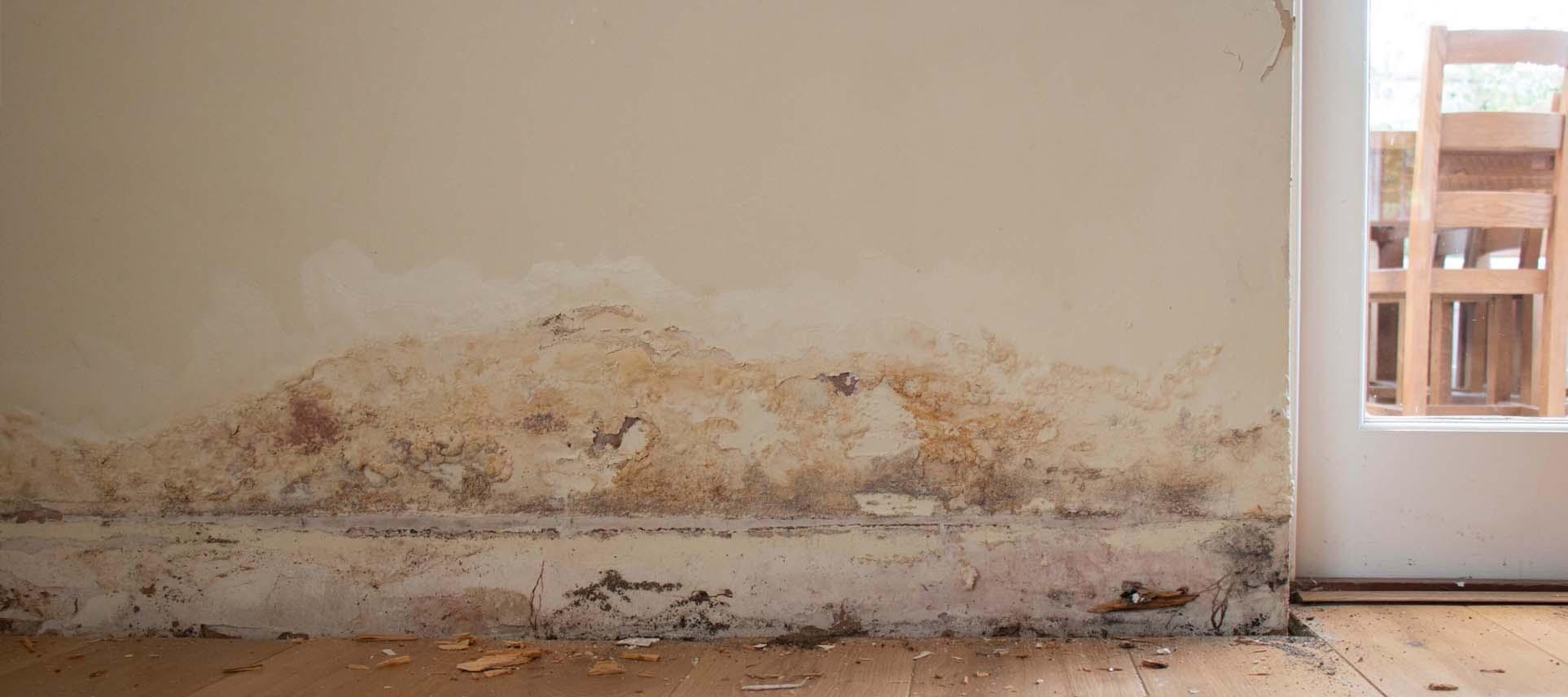
Common signs of rising damp to look out for include:
- Tide marks on internal walls, usually from the skirting board to around 1m in height
- Salty deposits on walls
- Brown or yellow patches on internal walls that are cold and damp to touch
- Peeling wallpaper or flaking paint
- Rotting skirting boards
- Flaking or bubbling plaster
- A damp or musty smell
- Black mould
2. Penetrating damp
Penetrating damp is where moisture enters a property because of a fault or defect.
Damaged roofs, leaking downpipes or guttering and faulty pointing are often to blame.
Penetrating damp is sometimes mis-diagnosed as rising damp, but there are some key differences in what to look out for.
Whereas rising damp is often spotted through tide marks or damp patches low on walls, penetrating damp can appear higher up, sometimes on ceilings and in top corners of rooms.
Look out for:
- Blistered plaster or signs of salt deposits on walls
- Damp patches on walls and in corners between walls and ceilings
- Rotting timber, such as skirting boards, or discoloured cornice, or ceiling roses
- Visible mould growth and a damp smell
3. Condensation
One of the biggest causes of damp in UK homes is condensation.
And rather than being caused by a structural defect or damp-proof course problem, condensation is often caused by human habits.
Condensation in homes occurs when excessive moisture condenses on cold windows, usually in the winter.
Excessive moisture in homes is often down to:
- Poor ventilation
- Steam from cooking or bathing
- Drying clothes
What is damp proofing?
Damp proofing involves taking steps to limit the amount of moisture that’s able to enter your home, either through:
- Structural improvements or changes
- Repairs to drainage systems
- Improved ventilation and insulation
Most major damp proofing work involves tackling issues caused by rising damp or penetrating damp.
Does damp proofing really work?
The key to whether damp proofing works is in the correct diagnosis.
Because signs of penetrating damp and rising damp are similar, penetrating damp is often mis-diagnosed as rising damp.
If the source of the damp problem is established accurately, the correct steps can be taken to fix it.
Can you do damp proofing yourself?
While it’s possible to take steps to damp-proof your property yourself, more serious issues with rising damp and penetrating damp are usually best for professionals.
Issues with condensation, however, are often down to poor ventilation and habits from those people living in the property.
So, either take steps to reduce the amount of moisture produced in your property, or if you’re a landlord, advise your tenants on what they can do to stop issues with condensation.
What to do if you have a damp problem
If you’re suffering with damp problems in your property, the first step is to have the issue correctly diagnosed.
The best way to do this is to have a damp survey carried out.
The surveyor should assess:
- The ground levels compared with the internal floor levels
- The condition of the roof and chimney stack
- The condition of rainwater pipes and guttering
- The property’s cavity wall or solid wall
7 damp proofing solutions
1. A new damp-proof course
One of the main causes of rising damp is a damaged damp-proof course – or the lack of one entirely if your property is particularly old.
The most common treatment for issues with a damp-proof course is for a damp specialist to inject a damp-proofing cream into your wall to act as a new course.
The cream is injected through drill holes in the masonry and once cured, it provides a protective layer to stop moisture rising through the brickwork.
An alternative approach is to have a new damp-proof course inserted, but this involves removing up to two courses of bricks, so is more invasive.
2. Lower your exterior ground level
Often, rising damp isn’t caused by issues with the damp-proof course (DPC) at all.
Instead, it can be because the exterior ground level is higher than the height of the course – meaning moisture is able to creep in.
If the ground level has built up naturally over time, it may simply be a case of digging out the soil, so it sits below the level of the DPC.
However, if a structure has been built (for example, a decking area) and is connected to the house above the DPC, this may need to be removed and rebuilt beneath the DPC.
3. Repair or replace guttering or a leaky roof
If your damp problem is caused by penetrating damp entering your property through the internal walls, this could be due to a leaky roof or damaged guttering.
Fixing damaged or blocked guttering, or cracks in roof tiles or external walls, is often the fastest way to solve problems with penetrating damp.
4. Use damp-proof paint
Older properties are often susceptible to penetrating damp due to ageing brickwork becoming more porous and allowing moisture in.
Damp-proof paint, which is silicone-based and water repellent, can be a good way to prevent this.
However, always seek professional advice on the best product to use based on your property’s age and condition.
5. Use a dehumidifier and ventilate your home
If you’re having issues with excess condensation in your home, a dehumidifier can help reduce the moisture levels and humidity.
Dehumidifiers pull moisture from the air and are a great way to reduce condensation on windows and walls, particularly during the colder months.
However, the best way to keep condensation at bay is to ensure your property is well ventilated – even if that means opening the windows for a time during winter.
6. Install air bricks or vents
Older properties with non-cavity walls and timber ground floors can be susceptible to rot caused by damp and a lack of air circulation below the floor.
Installing air bricks in place of standard bricks below the level of the floor can help.
Meanwhile, vents around chimney stacks can also help circulate the air and reduce the chances of damp forming.
7. Change your habits
The best way to solve problems with condensation is to change your habits.
Excessive moisture in properties is often caused by poor ventilation but exacerbated by the actions of those living there.
To reduce moisture build-up and issues with condensation:
- Use extractor fans in kitchens and bathrooms when cooking and showering
- Keep doors closed when cooking and showering
- If there are no extractor fans, open windows and keep doors closed when cooking and showering
- Regularly open windows for a time during the day to ‘air’ the property
- Keep bedroom doors open when sleeping to allow air to circulate
- Open trickle vents on windows
- Dry clothes outside wherever possible or on an airer inside – never dry clothes on a hot radiator
If you wish to speak with an advisor and discuss booking a damp survey with a professional damp surveyor, then call ARK on: 0161 286 4821 and we will be happy to help resolve your damp issues once and for all. Alternatively, contact us from our contact form.
PIV Units Manchester | PIV Units Stockport | PIV Units Cheshire | Damp Proofing Stockport | Damp Proofing Cheshire | Damp Proofing Manchester
Positive Input Ventilation Systems, PIV Units, Damp Proofing services in Stockport, Didsbury, Cheadle, Cheadle Hulme, Heaton Mersey, Tameside, Knutsford, Altrincham, Wilmslow, Hale, Sale, Alderley Edge, Macclesfield, Glossop, Poynton, Heald Green, Timperley, Bowden, Trafford, Styal, Warrington, Cheshire and Manchester.